Child self-report assessments can be challenging, for example because of sub optimal linguistic and reflection skills. Therefore we are exploring how we can develop a more tangible, quantitative self-report tool for children to measure the subjective effect of pedagogically framed play. This project is held within the project Can I join. The “Can I join in?” project is a project that studies how play may be used as a pedagogical tool in the inclusion work with socially marginalized children aged 6 to 9. Within this project there was a demand for measuring these experiences from the perspective of the child. The challenge was to transform the paper based likert-scale questionnaire towards a format in which children can share their voice, while still reliably, quantitively measure the subjective effect of pedagogically framed play.
I designed a quantitive, tangible and embodied self- report tool with which children can express their experience in a more natural, embodied and concrete way.
Individual Exchange Project Master 2.1 – Play and learn
In collaboration with: Designschool Kolding – Helle Marie Skovbjerg – Andreas Lieberoth Children & teachers at Risskov Skole – Aarhus, Denmark Children & teachers at Skjoldhøjskolen Aarhus, Denmark
In Proceedings: Designing Playful, Tangible Self-report Tools to Give the Child a Voice. In proceedings of the 19th ACM International Conference on Interaction Design and Children (IDC ’20)
Key learning points: Iterative process; Design for and design with children; co-creation sessions with children; user testing with children; A variety of ideation methods; A variety of child-centered design methods; Embodied learning; Learning about the value play; Balance between making and thinking.
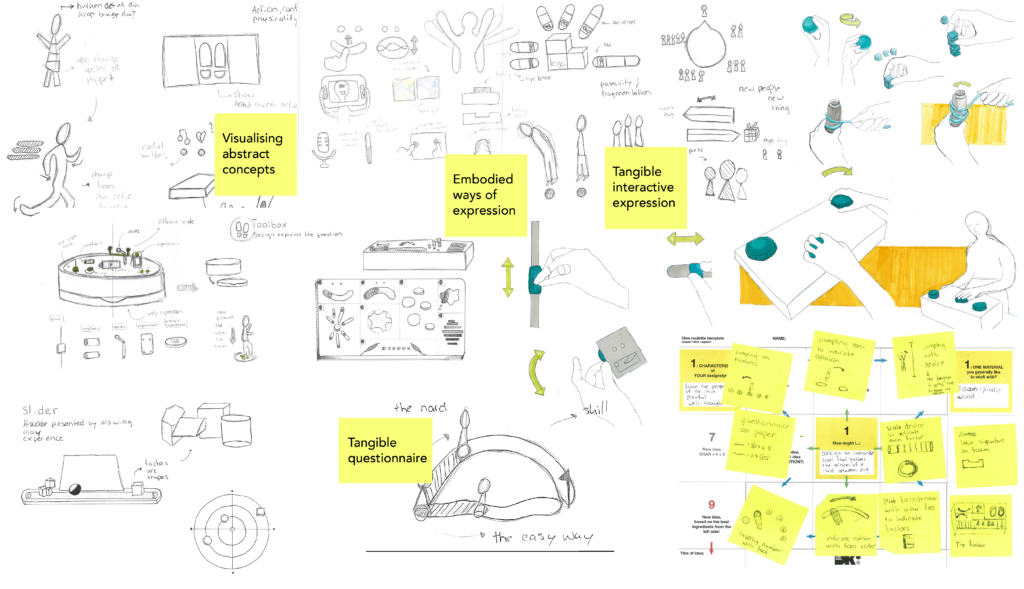
Through emphatizing with the children, contextual inquiry’s, observations at 2 schools in Denmark, sketching, drawing and low-fi prototyping I searched ways to translate the abstract concept of the questionnaire: “Play-factor” into visual tangible images with which children could interact with to share their experiences.
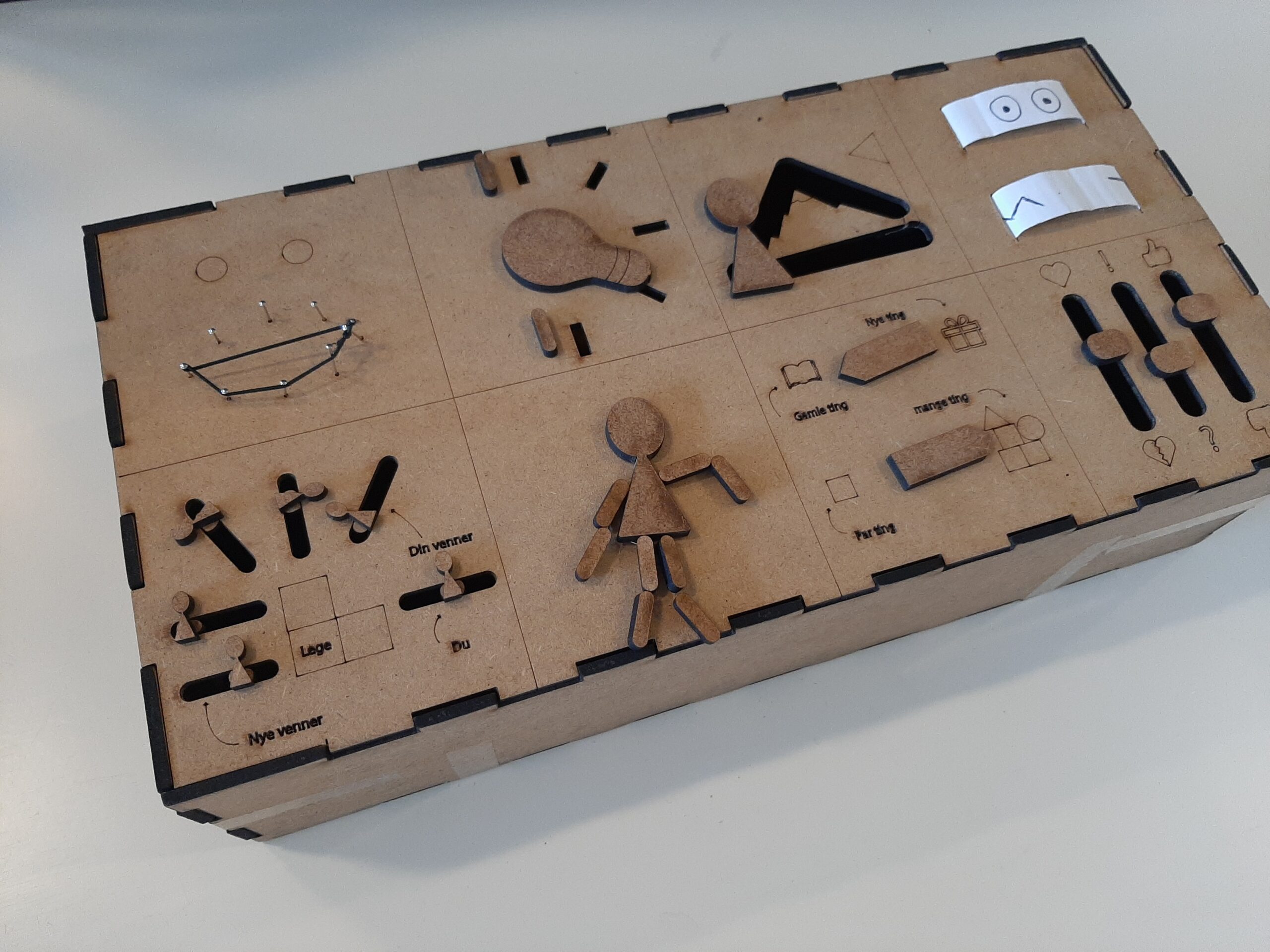
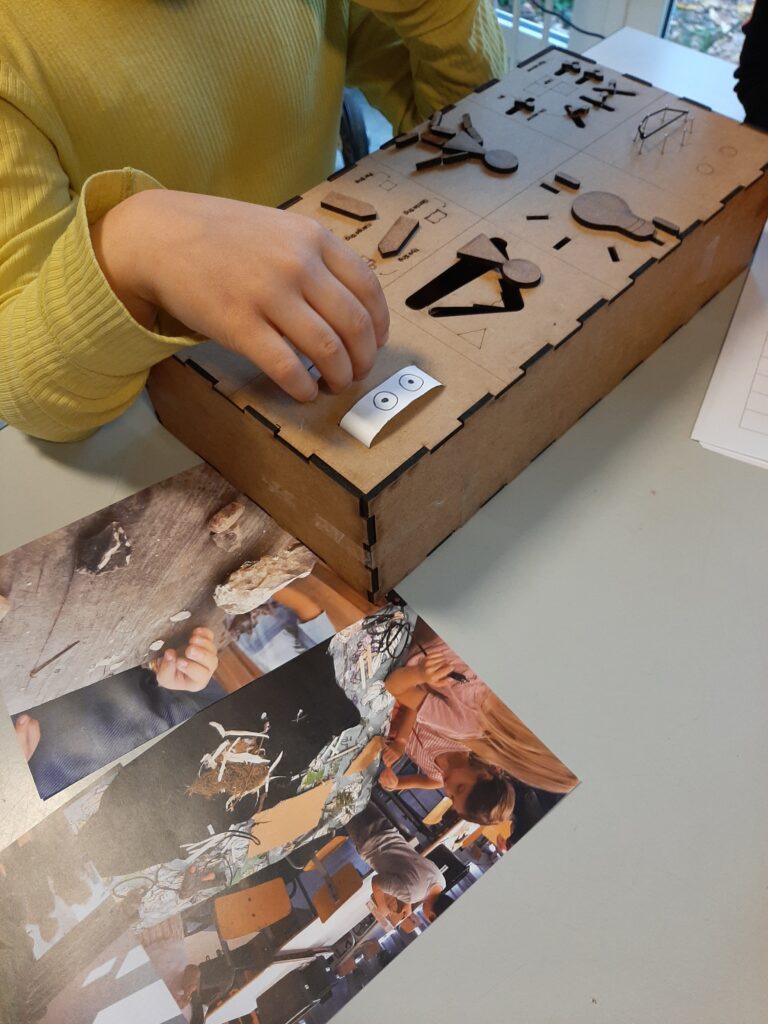
For cycle one I designed a research toolbox in which the factors were translated into a visual tangible format (‘Forestil dig det’).
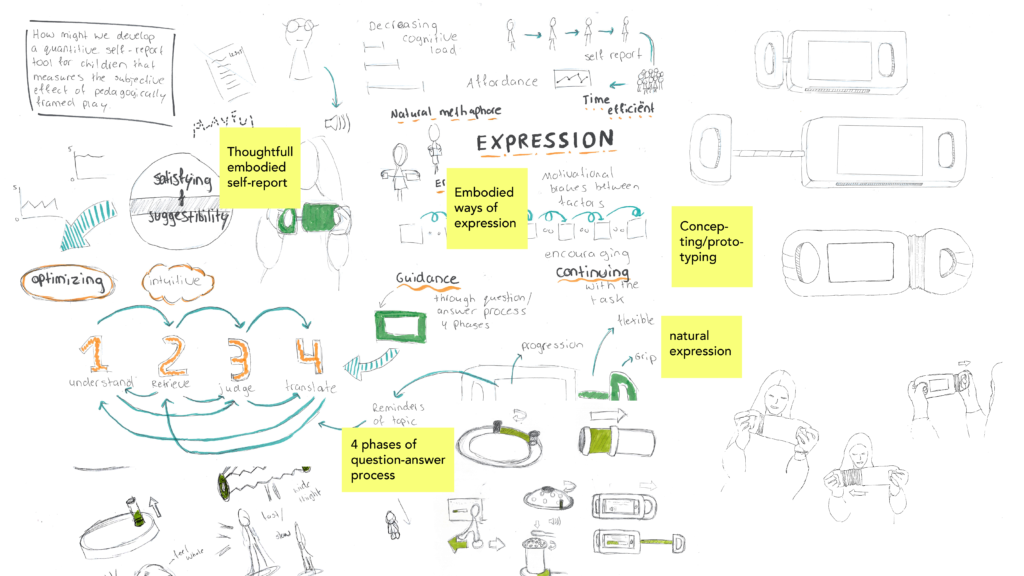
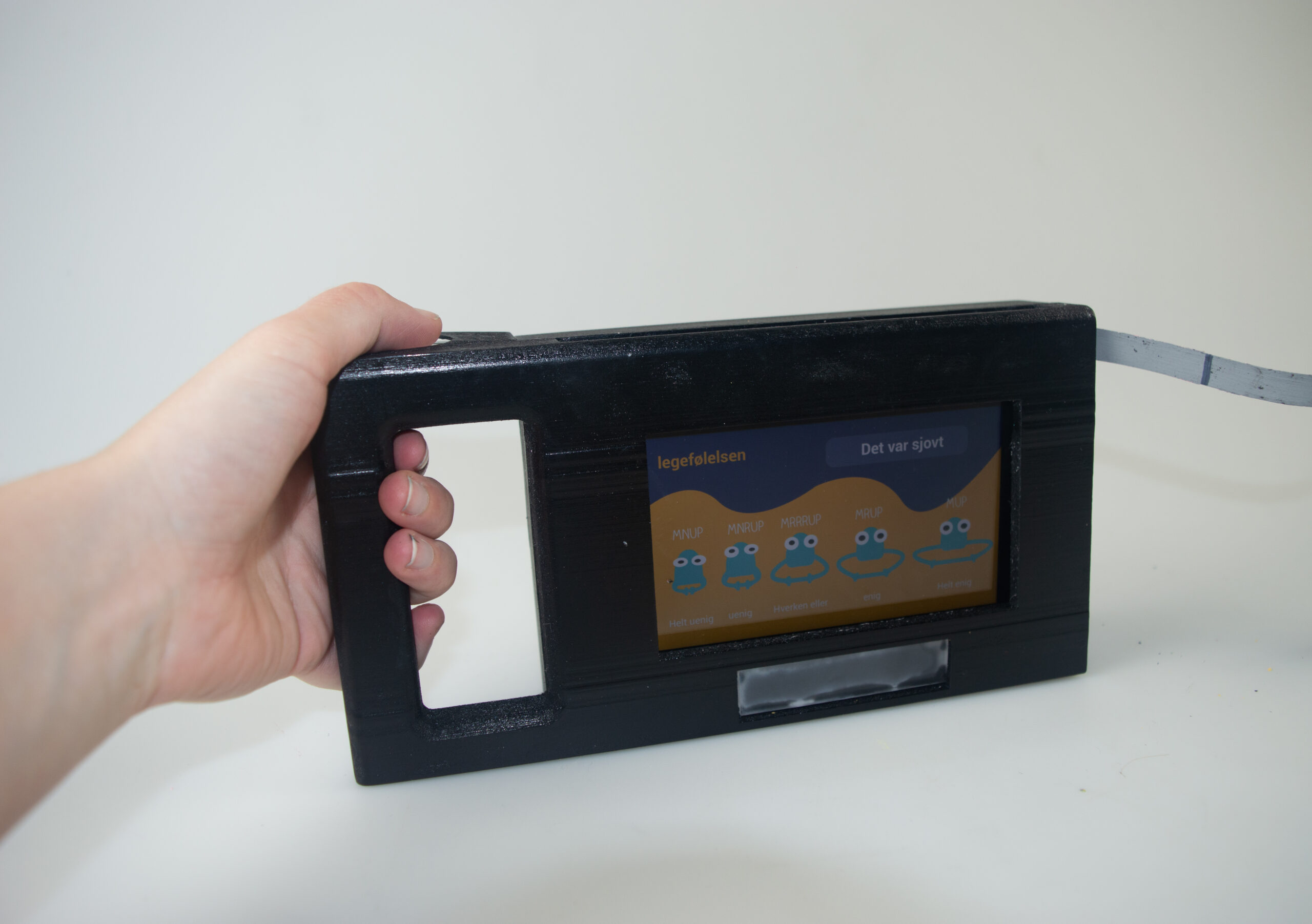
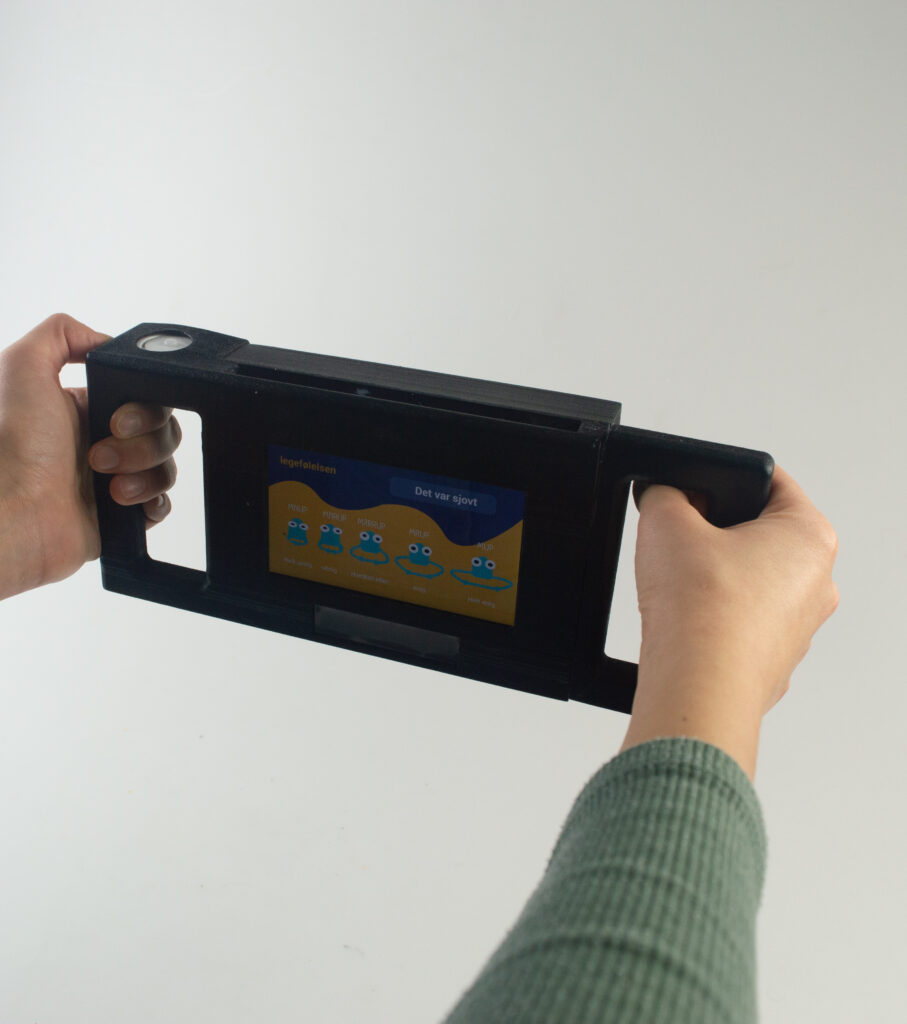
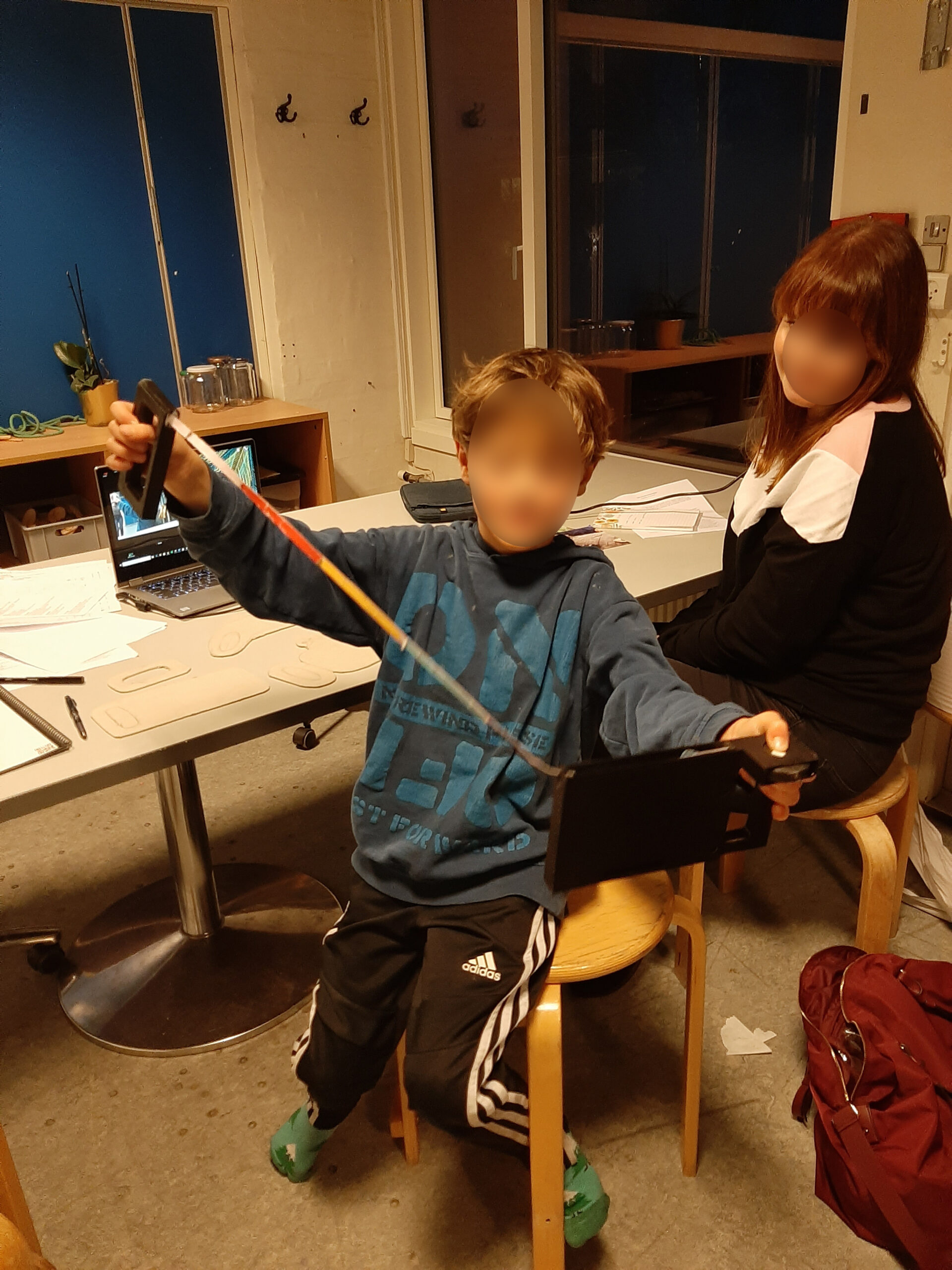
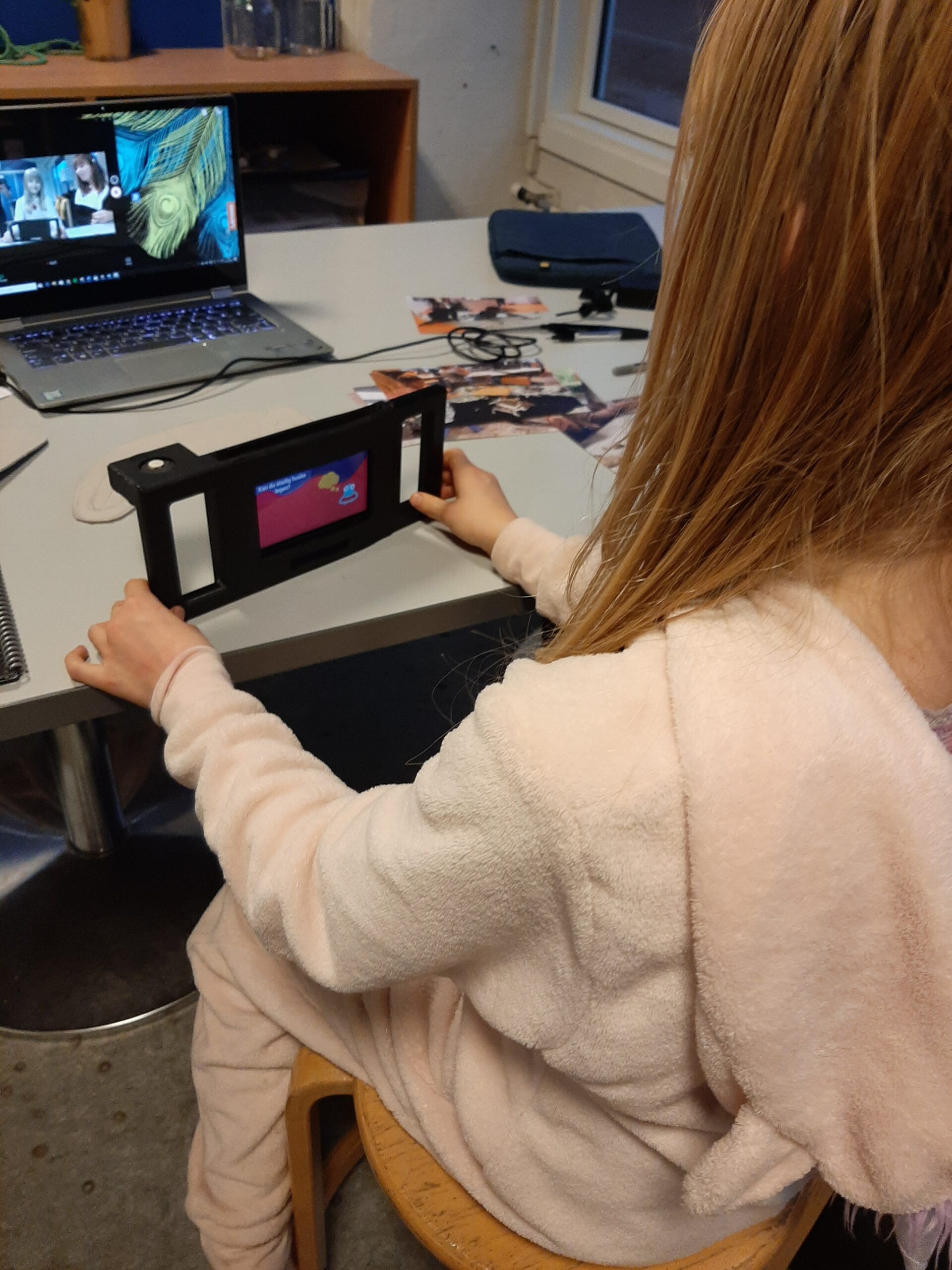
For the second evaluation I designed a more embodied tool that would allow children to express themselves in a natural way by showing how much they agree with a question from the questionnaire: “play-factor” through the tool.
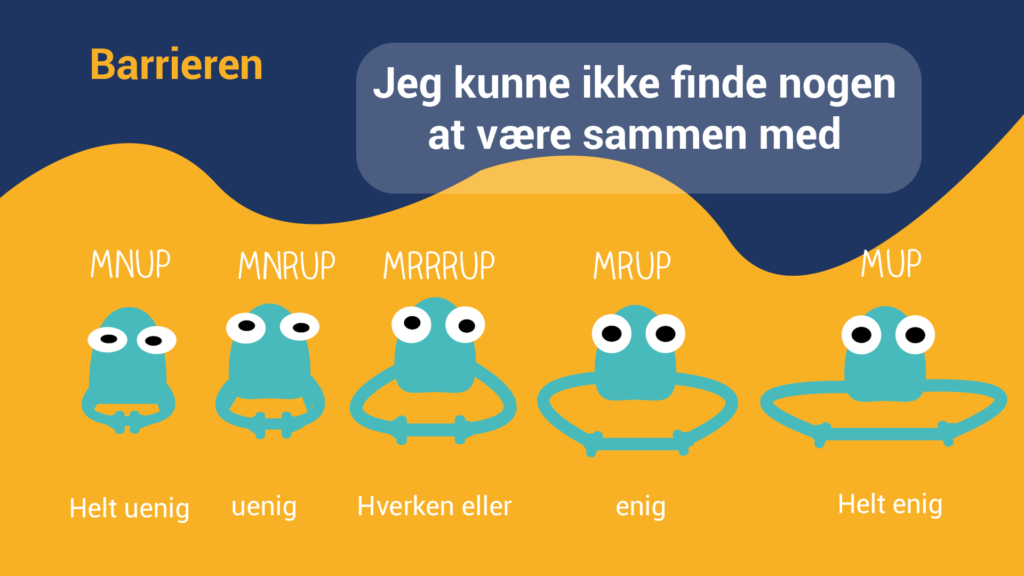
The prototype was a tool that can be pulled out like an accordion and pressed back in again. This movements mimics the gesture of showing how much or how big something is. The tool contains a screen with a game running, that will guide the children through the 4 stages of the question/answer process (Read et al. 2006). The hypothesis is that this interaction fits the mapping of level of agreement and minimizes the cognitive effort while answering a number of statements. Mup is a character that guides the children through the 4 stages. Through the tool children can enact Mup and try to communicate with him.
I have evaluated both of the prototypes with 15 Danish children. Our work revealed that transferring text-based questions into visual, tangible, de-constructed images of the question as shown in cycle one: ‘Forestil dig det’, did not really support our participants to be able to answer the questions. We have preliminary indications that by providing an embodied format that meets the children cognitively where they are and fits their way of expressing, we can stimulate motivation and confidence in completing the task and help them to go thoughtful and intuitive through all the stages of the question-answer process. Which could result in children choosing the optimizing approach instead of the satisficing one.
This project especially interested me because it allowed me to learn how to look at the world from the perspective of a child, furthermore it also allowed me to design a tool that enhances this perspective. It allowed me to work closely with and for children and taught me to implement methods, tools and technique to design with and for children. We have written a Work in Progress for the interaction Design and Children conference (IDC’20), We were very pleased to hear that our Work in Progress has been accepted. This benefited my development and taught me how to structure a research paper and to iteratively explain research findings and contribution.